
Do Late-Season Storms and Flooding Push Rats and Mice Into Manteo, NC Homes?
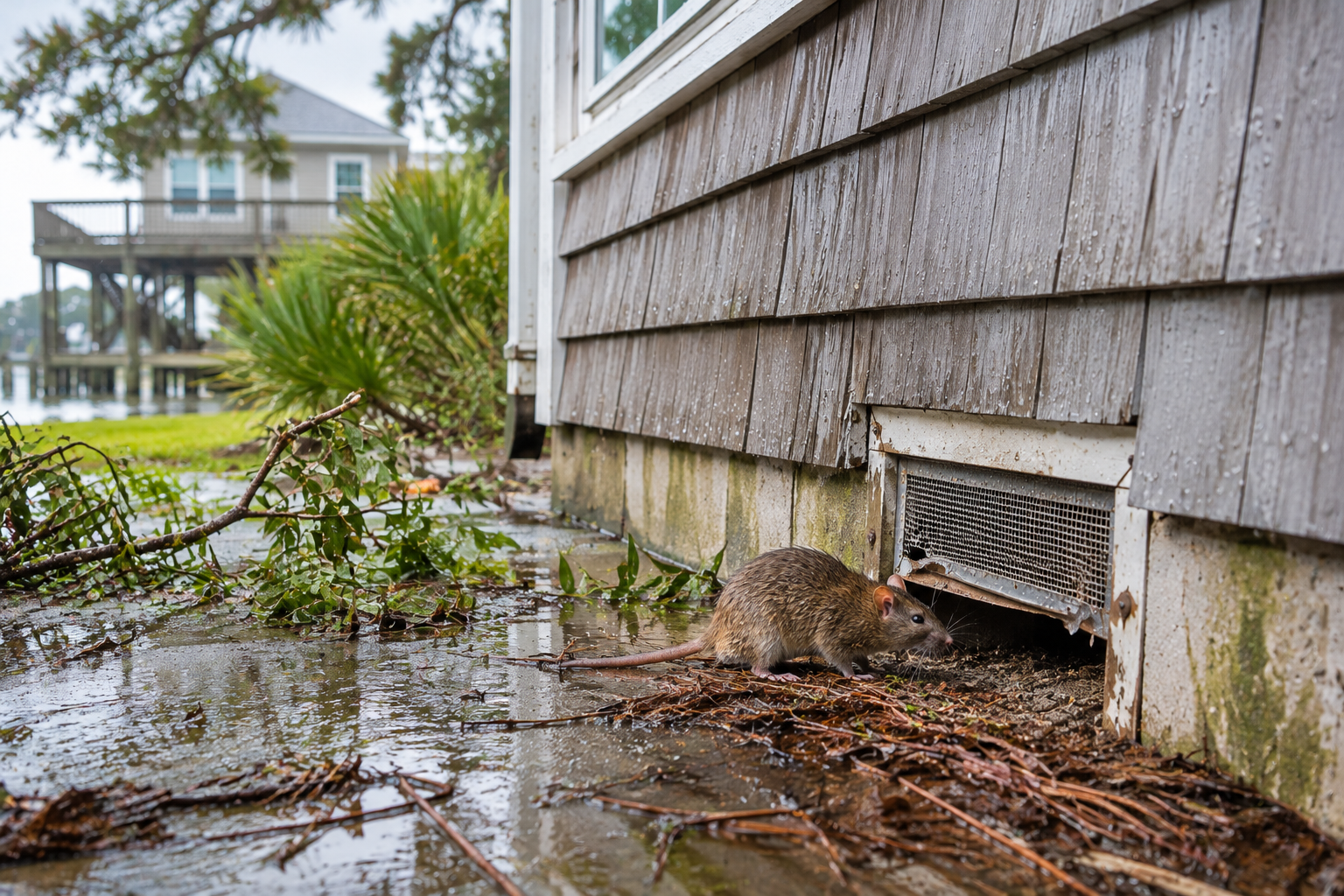
A late-season coastal storm moves through Manteo, bringing heavy rain, strong winds, and water pooling around your property. After the weather clears, you notice an unfamiliar scratching sound coming from the attic or discover small droppings in the garage. At first, you might assume it’s a coincidence, but the timing could be connected to the storm. For homeowners throughout Roanoke Island and the Outer Banks, changing weather conditions can create opportunities for rats and mice to move into places they wouldn’t normally occupy.
Yes, late-season storms and flooding can push rats and mice toward Manteo homes by disrupting outdoor nesting areas and encouraging rodents to seek higher, drier shelter. Heavy rain can flood burrows, while strong winds and falling debris may damage the exterior of a house. When these conditions occur together, rodents may find easier access to attics, crawl spaces, garages, and wall cavities.
There are several important things coastal homeowners should understand:
- Flooding can displace outdoor rodents. Norway rats that normally occupy underground burrows may seek higher ground when their nesting areas become saturated.
- Storm damage can create new entry points. Loose siding, damaged vents, and openings around roofs may give rodents access to Manteo homes.
- Roof rats and Norway rats behave differently. Recognizing their nesting preferences can help determine where to look for signs of activity.
- Post-storm debris can attract rodents. Fallen branches, damaged materials, and uncovered trash can provide food or shelter near homes.
- Professional rodent control addresses more than the animals themselves. Identifying entry points and correcting access problems are important parts of preventing recurring infestations.
At Outer Banks Pest Control, we’ve spent more than 50 years helping property owners throughout Manteo, NC, and surrounding coastal communities address pest and wildlife concerns. As a family-owned and operated pest management company, we provide rodent control services that include property assessments, removal solutions, and guidance on preventing future problems. We understand that coastal homes face unique challenges from storms, moisture, and changing outdoor conditions. Our goal is to help homeowners identify rodent activity and take practical steps toward protecting their properties.
Why Do Storms and Flooding Drive Rodents Toward Coastal Homes?
Storms and flooding can drive rodents toward coastal homes because rising water, strong winds, and damaged vegetation disrupt the sheltered places where they normally live. When outdoor nesting areas become unsafe, rats and mice may search for alternative locations that offer protection from weather and access to food.
Flooded Burrows Force Rodents to Relocate
Norway rats commonly nest in underground burrows near foundations, landscaping, drainage areas, and other sheltered locations. When heavy rain saturates the ground, these nesting areas may become flooded.
Rodents displaced by rising water often move toward higher ground. In residential neighborhoods, that can mean searching around raised foundations, garages, storage buildings, and other structures.
North Carolina State Extension specifically identifies storm-related flooding as a reason rodents may move into homes. Its guidance also notes that displaced animals may seek shelter in attics and other elevated spaces.
For homeowners near the Manteo waterfront, Shallowbag Bay, and other low-lying parts of Roanoke Island, this makes post-storm property inspections particularly worthwhile.
Wind Damage Creates Additional Opportunities
Strong winds can loosen exterior building materials or damage protective barriers around a home. When openings develop near vents, siding, soffits, or rooflines, rodents may be able to enter.
Some gaps may be difficult to notice from the ground. A small opening behind damaged trim or near a utility connection can provide access to a concealed interior space.
Storms don’t necessarily cause every infestation, but they can expose weaknesses that were already present. Addressing those vulnerabilities after severe weather helps reduce the likelihood of unwanted animal activity.
Roof Rats vs. Norway Rats in Coastal NC: What’s the Difference?
Roof rats and Norway rats differ in their preferred nesting locations, movement patterns, and behavior around buildings. Understanding these differences can help Manteo homeowners recognize where rodent activity may be occurring, although reliable identification often requires professional evaluation.
Roof Rats Prefer Elevated Areas
Roof rats are skilled climbers that frequently travel through trees, along fences, and across elevated structures. They commonly seek shelter in attics, roof spaces, and other aboveground locations.
Following a coastal storm, damaged soffits, roof vents, or openings near overhanging branches may provide access to these areas.
Homeowners might hear scratching overhead or notice activity around rooflines. However, sounds in an attic aren’t enough to identify a particular rodent species.
Norway Rats Often Stay Near the Ground
Norway rats generally spend more time at ground level and commonly establish burrows beneath vegetation, landscaping, or other protected areas. They may also use crawl spaces and lower portions of buildings.
Flooding can make these usual nesting locations unsuitable, encouraging rats to seek alternative shelter.
For homes in Manteo, Wanchese, and surrounding Dare County communities, inspecting accessible foundation areas after heavy rainfall can help reveal possible activity.
Mice Can Use Very Small Openings
House mice are capable of entering structures through surprisingly small gaps. North Carolina State Extension notes that an opening approximately 1/4 inch wide can be sufficient for an adult mouse.
This makes gaps around plumbing connections, utility penetrations, doors, and vents particularly important.
Unlike larger openings that may be obvious after storm damage, mouse entry points can remain unnoticed until droppings or other signs appear indoors.
How Does Storm Damage Let Mice Into a House?
Storm damage can let mice into a house by exposing gaps around exterior materials, damaging ventilation covers, and creating openings near utility connections. Rodents may also take advantage of existing vulnerabilities that become easier to access when debris accumulates or landscaping shifts during severe weather.
Common Entry Points Around Coastal Homes
Mice and rats don’t need an open door to enter a building. Small exterior gaps can provide access to concealed spaces that offer protection from outdoor conditions.
After a storm, homeowners should pay attention to:
- Damaged rooflines and soffits: Openings near the roof may provide access to attic spaces.
- Loose siding and exterior trim: Gaps can allow rodents to reach wall cavities.
- Crawl space vents and access doors: Damaged screens or covers may expose lower areas of the home.
- Utility penetrations: Openings around pipes, cables, and other connections can create entry routes.
- Garage door gaps: Worn weatherstripping may leave space along the bottom or sides.
- Damaged foundation areas: Cracks and openings near ground level may provide access.
- Disconnected or damaged vent covers: Exposed openings can allow animals into protected areas.
Our rodent assessments include inspecting possible access points around walls, windows, vents, crawl space covers, chimneys, and plumbing connections. Identifying these vulnerabilities helps us understand how rodents may be entering the property.
Why Temporary Repairs May Not Be Enough
A homeowner may cover a damaged opening with a material that looks secure but doesn’t withstand rodent activity. Rats and mice can chew through some common building materials, including certain foams and soft sealants.
North Carolina State Extension recommends appropriate rodent-resistant materials for vulnerable openings. However, repairs must also preserve required ventilation, drainage, and equipment clearances.
If animals may already be inside, the exclusion process should be coordinated with their removal. Sealing every opening without confirming the situation can trap rodents within the structure.
What Are the Warning Signs of Rodents After a Coastal Storm?
Common warning signs of post-storm rodent activity include scratching noises, droppings, gnaw marks, disturbed insulation, and evidence of nesting. These symptoms may appear shortly after severe weather, although rodents can also enter homes during ordinary seasonal conditions.
Look for Changes Indoors
Rodents often remain hidden during the day, so homeowners may notice indirect evidence before seeing an animal.
Potential warning signs include:
- Scratching or scurrying sounds in walls, ceilings, or attics.
- Small droppings in garages, cabinets, or storage areas.
- Gnaw marks around stored materials or household items.
- Torn paper, fabric, or insulation used as nesting material.
- Unusual odors near enclosed spaces.
- Damaged food packaging or scattered crumbs.
- Visible holes around exterior walls or vents.
Not every unusual sound or odor indicates a rodent infestation. However, multiple signs appearing together deserve attention, especially after flooding or wind damage.
Don’t Ignore Activity in Crawl Spaces
Crawl spaces can provide shelter for rodents seeking protection from wet outdoor conditions. These areas may contain insulation, utility lines, and concealed openings that make activity difficult to detect.
Homeowners should avoid entering flooded or structurally damaged crawl spaces. Standing water, electrical hazards, displaced animals, and unstable materials can create serious safety concerns.
A professional post-storm pest inspection can help identify activity without requiring homeowners to enter unsafe or difficult-to-access areas.
Why Is Rodent Exclusion Important for Coastal Homes?
Rodent exclusion is important for coastal homes because removing existing animals doesn’t necessarily prevent new ones from entering through the same openings. Effective prevention involves identifying access routes, addressing vulnerable exterior areas, and reducing the conditions that attract rodents.
Removal Alone May Not Solve the Problem
A mouse removal service or rat exterminator may address an active infestation, but additional rodents can enter if the building remains accessible.
For example, a damaged crawl space vent may continue providing an entry route long after the original animals have been removed.
A rodent exclusion service for coastal homes focuses on limiting access through appropriate repairs and protective measures.
At Outer Banks Pest Control, we inspect potential entry points and provide recommendations for preventing future infestations. Our team can discuss the appropriate combination of removal and preventive services for your property.
Reduce Outdoor Attractions
Storm cleanup can also make a difference in rodent prevention. Piles of damaged furniture, fallen branches, and other debris can create protected spaces near the house.
North Carolina State Extension recommends removing storm debris when conditions permit and keeping potential food sources secured.
Homeowners can reduce attractions by storing trash properly, removing fallen food waste, and avoiding pet food left outdoors overnight.
For properties near Nags Head, Kill Devil Hills, and the soundside communities surrounding Manteo, these habits are useful throughout the year, not just after major storms.
What Should Homeowners Do After a Storm to Prevent Rodents?
Homeowners can reduce post-storm rodent risks by checking accessible exterior areas, removing debris, protecting food sources, and arranging professional evaluation when signs of activity appear. The most important first step is ensuring that the property is safe to inspect.
Start With a Safe Exterior Walkthrough
Wait until dangerous weather has passed and avoid areas with standing floodwater, downed power lines, or suspected structural damage.
From safe ground-level locations, look for damaged vent covers, gaps around doors, loose siding, and debris piled against the building.
Take photographs of areas that appear damaged rather than attempting repairs in hazardous locations. Roof damage and elevated openings should be evaluated by appropriately qualified professionals.
Clean Up Carefully
Rodent droppings and nesting materials can carry harmful microorganisms. Homeowners should avoid sweeping or vacuuming dry droppings because these activities can disperse contaminated particles.
Follow CDC guidance for ventilating affected areas and using appropriate disinfecting procedures and protective equipment. Extensive contamination or activity inside difficult-to-access spaces may require professional assistance.
A pest control inspection can help determine whether rodents are present and what action is appropriate. It can also identify whether damaged building materials are contributing to the problem.
When Should You Call a Professional Rat Exterminator or Mouse Removal Service?
Professional rodent control is appropriate when you find droppings, hear recurring activity, notice gnaw damage, or discover possible entry points after a storm. Early evaluation can help identify the animals involved and determine whether the property needs removal, exclusion, or additional corrective work.
Why Identification Matters
Different rodents may use different areas of a home. A rat nesting near a crawl space may require a different inspection approach than mice entering through utility openings.
Professional evaluation also helps distinguish an active infestation from signs of previous activity. This is particularly helpful when a property has experienced multiple storms or long periods without a pest inspection.
We provide rodent and wildlife removal services throughout Manteo and nearby Outer Banks communities. Our process begins with assessing the property and identifying possible access routes before recommending appropriate solutions.
Protect Your Home Before the Next Storm
A rodent problem may become more difficult to manage when animals establish nesting areas inside walls, attics, or storage spaces.
The longer entry points remain open, the more opportunities additional rodents may have to enter.
Our family-owned pest control company offers free estimates for rodent and wildlife removal services. We can evaluate your concerns and discuss preventive measures suited to your home.
Frequently Asked Questions About Storm-Related Rodents in Manteo, NC
Do hurricanes and tropical storms cause rats to enter homes?
Hurricanes and tropical storms can increase the likelihood of rodents entering homes by flooding nests and damaging exterior building materials. Rats and mice may seek higher, drier shelter when outdoor conditions become unsuitable. However, storms aren’t the only cause of rodent infestations, and a professional inspection can help identify the situation.
Are roof rats or Norway rats more likely to enter Manteo homes after flooding?
Both species may enter structures, but their typical nesting preferences differ. Norway rats commonly use underground burrows that can flood, while roof rats tend to occupy elevated areas. The species involved depends on local conditions and the property, so identification should be based on evidence rather than assumptions.
How small of an opening can a mouse use to enter a house?
An adult house mouse can enter through an opening approximately 1/4 inch wide, according to North Carolina State Extension. Small gaps around pipes, doors, siding, and vents can therefore provide access. Professional exclusion work focuses on identifying vulnerable openings and recommending suitable repairs.
Should I inspect my attic after a storm in Manteo, NC?
Checking for evidence of rodent activity after a storm can be useful, but attic inspections should only be performed when access is safe. Roof damage, exposed wiring, and contaminated insulation can create hazards. A professional post-storm pest inspection may be appropriate if you hear scratching or notice other warning signs.
Does homeowners insurance cover damage caused by rats or mice?
Coverage for rodent damage varies by insurer and policy, and many homeowners insurance policies exclude certain damage caused by rodents. Storm-related building damage may be treated differently from subsequent animal activity. Review your policy and contact your insurer for information specific to your situation.
What is the best way to prevent rodents after coastal flooding?
The most effective approach combines safe debris removal, food-source control, exterior inspections, and appropriate rodent exclusion. Homeowners should address damaged vents, siding, and other access points once conditions are safe. Professional evaluation is recommended when rodents may already be inside the structure.
Does Outer Banks Pest Control offer rodent control in Manteo, NC?
Yes, we provide rodent control and wildlife removal for homeowners throughout Manteo and surrounding Outer Banks communities. Our services include assessing potential entry points, developing targeted removal solutions, and recommending preventive measures. We also offer free estimates so customers can discuss their concerns before scheduling service.
Can rats and mice return after professional removal?
Yes, rodents may return if accessible entry points and attractive conditions remain. Removing existing animals is only part of an effective long-term approach. Identifying openings, reducing food sources, and maintaining exterior protections can help lower the risk of future activity.
Keep Coastal Storms From Becoming a Rodent Problem
Late-season storms and flooding are familiar concerns for homeowners throughout Manteo and the Outer Banks, but the problems don’t always end when the weather clears. Flooded nesting areas, storm debris, and damaged building materials can create opportunities for rats and mice to enter homes in search of shelter. Understanding these risks makes it easier to recognize early warning signs and address vulnerable areas before an infestation becomes established. A combination of safe post-storm inspections, appropriate exterior repairs, and professional rodent control can help protect your home from unwanted activity.
At Outer Banks Pest Control, we’ve spent more than 50 years serving Manteo, Roanoke Island, and surrounding Dare County communities. Our family-owned and operated company provides rodent and wildlife removal, property assessments, and preventive pest management solutions designed around individual properties. We understand that coastal homes face changing conditions throughout the year, from heavy rain and high winds to ordinary seasonal pest activity. Whether you’ve noticed scratching in the attic, discovered droppings after a storm, or found damaged openings around your home, we’re here to help you determine the next steps.
Schedule Rodent Control in Manteo, NC, With Outer Banks Pest Control
If you’ve noticed signs of rats or mice after a recent storm, contact Outer Banks Pest Control for a professional assessment of your property. Call 252-473-1633 to request a free estimate and discuss our rodent control, mouse removal, and preventive services. We’ll help you identify potential entry points, evaluate rodent activity, and explore practical solutions for protecting your coastal home.